



Tooth removal is never the first choice — our aim is always to preserve natural teeth whenever possible. Still, there are clear situations when extraction becomes the responsible, health-protecting decision. In those cases, removing the tooth prevents further damage, reduces the risk of infection, and protects the function and comfort of your mouth.
We evaluate each situation from multiple angles: your current symptoms, the condition of the tooth and surrounding tissues, and how the tooth affects neighboring teeth and overall bite. The decision to extract is based on clinical findings, diagnostic imaging, and a careful discussion about alternatives and next steps.
When an extraction is advised, our goal is to make the process predictable and as comfortable as possible. We’ll explain why removal offers the best outcome, what to expect during the procedure, and the options for replacing the tooth if needed in the future.
Primary (baby) teeth that won’t fall out or are badly decayed
Sometimes a baby tooth remains firmly attached while the permanent tooth below is trying to come in. When a primary tooth won’t resorb or becomes fused to the jawbone, it can block normal development and alignment. Removing an over-retained primary tooth can help the permanent tooth erupt properly and prevent orthodontic complications.
Permanent teeth with extensive decay that cannot be repaired
Decay that advances past the point of effective restoration compromises the remaining tooth structure and the tooth’s internal tissues. When there’s insufficient healthy structure to support a filling or crown, extraction may be the safest option to stop infection and protect nearby teeth and tissues.
Severe fractures or damage to a tooth
Cracks and breaks vary widely. Minor chips often can be repaired, but fractures that extend below the gum line or into the root can render a tooth unserviceable. In those situations, removal may be required to relieve pain and prevent further complications.
Advanced periodontal disease
When gum disease causes significant loss of the bone and soft tissue that support teeth, individual teeth can loosen and become nonfunctional. Extracting severely compromised teeth can improve overall oral health and make it easier to treat adjacent areas.
Impacted or troublesome wisdom teeth
Third molars frequently lack room to erupt correctly, leading to partial eruption, decay, or damage to neighboring teeth. Early removal of problematic wisdom teeth often avoids pain, infection, and disruption to the dental arch later on.
Teeth removed as part of orthodontic planning
In some orthodontic cases, selective extraction is recommended to create space and achieve a more balanced, stable bite. This decision is made in collaboration with your orthodontist to support long-term alignment and facial harmony.

Before any procedure, a thorough evaluation ensures we choose the safest, most effective approach. This includes a review of your medical history, current medications, and any conditions that could affect treatment. Understanding your overall health lets us tailor care — for example, coordinating with your physician if a medical clearance or medication adjustment is advisable.
We rely on up-to-date diagnostic tools, including clinical exams and digital radiographs, to assess root anatomy, bone levels, and proximity to important structures. That imaging helps determine whether a tooth is suitable for a simple extraction or if a surgical approach will be necessary.
Comfort and communication are priorities. We discuss anesthesia options, including local anesthesia and, when appropriate, dental sedation to reduce anxiety. You’ll receive clear pre-operative instructions to prepare for the appointment and to lower the risk of complications.
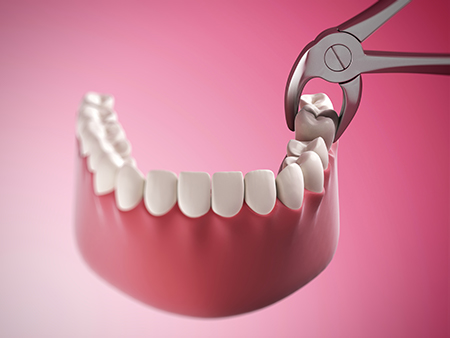
When a tooth is fully visible and its root structure is straightforward, it can often be removed with a relatively brief, minimally invasive procedure. After numbing the area with local anesthetic, the tooth is gently loosened and lifted using specialized instruments. Most patients tolerate this well and experience minimal discomfort.
The procedure itself is typically quick, and many patients return to normal light activities the same day. We’ll review post-procedure care directly with you, including how to manage bleeding, pain control strategies, and when to resume routine oral hygiene.
If you experience dental anxiety, we can discuss sedation options to help you stay calm and comfortable. Our aim is to make the visit as stress-free as possible while ensuring precise, conservative technique to protect neighboring teeth and tissues.
Some teeth require more than a straightforward approach — impacted teeth, severely fractured teeth, or those with complex root anatomy may need surgical removal. A surgical extraction can involve a small incision, careful removal of a bit of bone, and sectioning the tooth to extract it safely while preserving surrounding structures.
In more complicated cases, we may refer you to an oral and maxillofacial surgeon who specializes in advanced extractions. Referrals are made with your best outcome in mind; specialists have the training and equipment to handle complex anatomy and to manage potential risks effectively.
Regardless of where the procedure takes place, you will receive detailed explanations about what to expect, how long the recovery is likely to take, and specific post-operative instructions. We coordinate care closely with any specialist to ensure continuity and to discuss replacement options if the removed tooth will need to be substituted.
Healing after an extraction follows a predictable course when care instructions are followed. Immediately after the procedure, biting on gauze helps control bleeding and encourages clot formation. We advise keeping firm pressure for the time recommended and changing gauze only as directed.
Protecting the new clot is critical: avoid rinsing, spitting, or using a straw for the first day to prevent dislodgement. Rest, gentle icing, and keeping your head elevated for the early hours help reduce swelling and discomfort. Take any prescribed medications as instructed, and use over-the-counter pain relief when appropriate.
Maintain gentle oral hygiene around the site and stick with soft foods for the first few days. Smoking and tobacco use interfere with healing and should be avoided. If stitches were placed, you’ll be given follow-up instructions and an appointment if necessary so we can monitor your progress.
Control bleeding with gauze
Hold pressure on the site for the time recommended. Small amounts of oozing are normal for 24 hours; persistent, heavy bleeding should prompt a call to our office.
Protect numb tissues
Avoid chewing or touching the area until sensation returns to prevent accidental injury to lips, tongue, or cheeks.
Take medications as directed
Follow any antibiotic or pain medication instructions given by your dentist. Take pain medication proactively when advised rather than waiting for severe pain to develop.
Avoid actions that disturb the clot
Do not rinse vigorously, spit forcefully, or use straws for the first 24–48 hours to preserve the healing clot.
Use cold packs for swelling
Apply ice to the cheek for short intervals during the first day to reduce swelling; switch to warm compresses later if recommended.
No smoking
Avoid tobacco for at least a week, as it significantly increases the risk of healing complications such as dry socket.
Soft diet and hydration
Stick to soft, cool foods for the first few days and stay well-hydrated, avoiding hot, spicy, or carbonated beverages until healing progresses.
Gentle oral hygiene
Maintain brushing away from the extraction site and use a mild saltwater rinse as directed after the initial 24 hours to keep the area clean.
Follow-up care
Keep any scheduled follow-up appointments so we can check healing and remove stitches if needed. Contact us if you notice increasing pain, swelling, fever, or any unexpected symptoms.
Selecting a dental team you trust can make a significant difference in your experience and outcome. We take a conservative, evidence-based approach and communicate clearly about the reasons for extraction and the alternatives. When referral to a specialist is in your best interest, we help coordinate the next steps so you receive timely, expert care.
If a removed tooth will need replacement, there are several well-established options — from removable dentures to fixed bridges and dental implants. We’ll review the pros and cons of appropriate solutions for your situation and help you plan a restorative pathway that supports long-term oral health and function.
At All About Smiles, our focus is on predictable, compassionate care tailored to each patient’s needs. We balance technical expertise with clear communication so you feel informed and supported every step of the way.
To learn more about extractions or to discuss a specific situation, contact us for additional information or to schedule a consultation. Our team is ready to answer your questions and help you make a confident decision about your care.
Tooth extraction is recommended only when retaining the natural tooth would pose greater risk to oral health than removal. Common reasons include severe decay that has destroyed tooth structure, advanced periodontal disease, extensive fracture below the gum line, and teeth that are nonrestorable. Extractions can also be part of orthodontic planning or performed to remove impacted wisdom teeth that threaten neighboring teeth.
Before recommending extraction, clinicians evaluate symptoms, clinical findings, and diagnostic imaging to consider restorative and conservative alternatives. The decision is individualized and balances short-term recovery with long-term oral function and health. When removal best protects the patient's overall health, the dentist will explain the rationale and next steps, including replacement options if appropriate.
A simple extraction is appropriate when the tooth is fully visible in the mouth and has a straightforward root anatomy that can be accessed with forceps. Surgical extractions are required when a tooth is impacted, fractured at or below the gum line, or has complex root morphology that makes removal more invasive. Imaging such as digital radiographs helps determine which approach will be safest and most efficient.
The clinical exam, the patient's medical history, and the presence of nearby anatomical structures also influence the choice of technique. If significant bone removal, an incision, or sectioning of the tooth is anticipated, a surgical plan is developed and the patient is informed about the expected recovery. When complexity exceeds the scope of general practice, referral to a specialist may be recommended.
A thorough preoperative evaluation includes a review of medical history, current medications, and any conditions that could affect healing or bleeding. Diagnostic imaging is used to assess root shape, bone levels, and proximity to nerves or sinuses so the team can plan a safe procedure. Patients are asked about allergies, pregnancy status, and recent illnesses to ensure the chosen anesthesia and technique are appropriate.
At All About Smiles in Stockton the dental team discusses anesthesia options, pre-operative instructions, and expected recovery to ensure patients are informed and comfortable. We also coordinate with physicians when medical clearance or medication adjustments are needed to reduce procedural risks. Clear communication and written instructions help patients prepare and lower the chance of complications.
Local anesthesia is the most common option and numbs the extraction site so the patient feels no pain during the procedure while remaining awake. For patients with anxiety or complex procedures, in-office sedation such as nitrous oxide or oral sedatives can be offered to promote relaxation. Intravenous sedation or general anesthesia may be arranged when clinically indicated and performed in a controlled setting.
The choice of anesthesia or sedation depends on the patient's medical status, procedure complexity, and comfort level, and it is made after a discussion of risks and benefits. Pre-operative fasting, medication instructions, and transportation arrangements are reviewed when sedation beyond local anesthesia is planned. Monitoring and recovery protocols are in place to ensure patient safety throughout the experience.
During a simple extraction the area is first numbed with local anesthetic and the tooth is gently loosened with elevators and removed with forceps. The procedure is typically brief and designed to minimize trauma to surrounding bone and soft tissues. Most patients feel pressure rather than pain during the extraction and are comfortable with appropriate anesthesia.
After removal, the socket is inspected and gauze is placed to help the blood clot form and control bleeding. Stitches are rarely required for simple extractions but may be used if necessary to promote healing of the gum tissue. The clinician will review aftercare steps, emergency contact information, and a follow-up plan as appropriate.
A referral to an oral and maxillofacial surgeon is recommended when an extraction involves impacted teeth, complex root anatomy, or proximity to vital structures such as nerves or the sinus. Surgeons have specialized training and equipment to manage extractions that require bone removal, tooth sectioning, or sedation beyond what is provided in a dental office. Referral is a standard part of coordinated care and is made with the patient's best outcome in mind.
The general dentist will share imaging and clinical findings with the specialist to ensure continuity of care, and the team will discuss expected recovery and replacement options if applicable. Patients receive clear instructions about where the procedure will take place and what to expect before and after the referral appointment. Coordination between providers helps maintain safety and streamline follow-up care.
Controlling bleeding immediately after an extraction is essential; patients should hold firm pressure with gauze as instructed until the bleeding subsides. Protecting the blood clot by avoiding vigorous rinsing, spitting, and using straws for the first 24–48 hours reduces the risk of dry socket and promotes healing. Patients are advised to rest, apply ice to reduce swelling, and follow medication directions for pain and infection control.
Oral hygiene should be gentle around the extraction site, with soft foods and adequate hydration recommended for the early recovery period. Smoking and tobacco use should be avoided because they impair healing and increase complications. A follow-up appointment allows the clinician to monitor healing and remove sutures if placed.
Most patients experience initial healing within one to two weeks, with the socket filling in and soft tissues maturing over several weeks. Swelling and discomfort peak in the first 48–72 hours and then gradually improve with proper care and medication as directed. Complete bone remodeling may take several months, but routine function typically resumes much earlier.
Watch for signs of complications such as increasing pain after the first few days, persistent heavy bleeding, fever, or unusual swelling, and contact the office if these occur. Dry socket presents as worsening pain and exposed bone and often requires prompt treatment to control symptoms and facilitate healing. Timely communication with your dental team ensures complications are managed quickly and effectively.
When a tooth is removed, replacement may be recommended to restore chewing function, maintain adjacent tooth position, and support facial structure. Common options include removable partial dentures, fixed bridges, and dental implants, each with different indications based on oral health, anatomy, and patient goals. Your dentist will explain the advantages and limitations of each option and help you plan a restorative timeline.
Some replacement pathways begin immediately when the extraction is uncomplicated, while others require a healing period to assure the site is healthy before definitive restoration. Bone grafting or ridge preservation techniques can be used at the time of extraction to support future implant placement or to optimize the ridge for prosthetic solutions. Coordination between surgical and restorative teams supports predictable outcomes and long-term oral health.
Preventing extractions focuses on early detection and consistent preventive care, including regular dental exams, professional cleanings, and prompt treatment of decay and gum disease. Good home care—brushing twice daily with fluoride toothpaste and daily flossing—reduces the risk of decay and periodontal problems that can lead to tooth loss. Maintaining a healthy diet and avoiding tobacco also support strong teeth and gums.
Addressing teeth that are cracked, painful, or suspicious at an early stage can often preserve them with restorative treatment rather than extraction. When orthodontic, restorative, or periodontal interventions are recommended, following a coordinated plan with your dental team helps protect natural teeth and function. Open communication with your dentist ensures concerns are evaluated promptly and that preservation is prioritized whenever feasible.

Before or after office hours appointments available upon request.