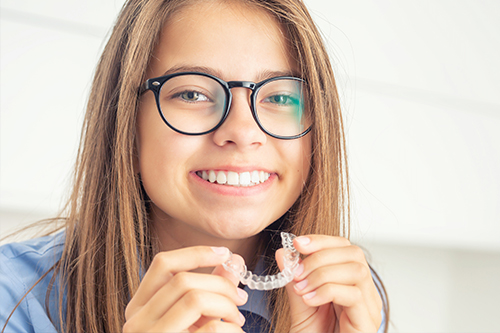
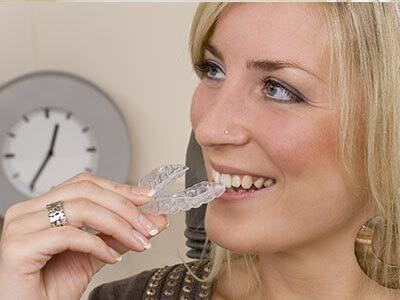
The image shows a smiling woman holding up a toothbrush with her right hand against a brick wall background.

Invisalign®

Invisalign® offers a modern alternative to traditional braces: a series of custom, removable clear aligners designed to move teeth gently and predictably. For people who want an effective orthodontic solution with a low visual profile, this approach blends clinical precision with everyday convenience. Below, we explain how the system works, what patients can expect at each stage, and why many people choose clear aligners to address alignment and bite concerns.

Why clear aligners are a practical option

Clear aligners combine digital planning with incremental tooth movement, which lets clinicians map an entire treatment from start to finish. Using a 3-D scan of your mouth, your provider creates a sequence of aligners that apply specific forces to targeted teeth. Each aligner is worn for a prescribed interval before you advance to the next one in the series, allowing steady progress toward the planned outcome.

Because the aligners are removable, they make daily routines simpler: you can eat your usual foods and keep normal brushing and flossing habits without having wires or brackets in the way. For many adults and teens, this removable nature contributes to better oral hygiene throughout treatment and reduces the risk of tooth decay or gum problems associated with cleaning challenges.

Technology plays a central role in predictability. The digital treatment plan allows for precise staging of tooth movements and helps your clinician anticipate and adjust for individual responses. That combination of clinical oversight and engineered aligner design makes clear aligners a compelling choice for a broad range of alignment issues.

High-resolution imaging and individualized planning guide every stage of care

Modern aligner approaches rely on accumulated clinical data and iterative improvements in materials and manufacturing. The result is aligner fit and movement mechanics that are more refined than early clear-plate systems, with better control over complex tooth movements when indicated. For patients interested in a discreet path to alignment, the combination of clinical expertise and advanced production techniques is a major advantage.

  • Provide comfortable, often less intrusive treatment compared with conventional braces
  • Address a wide variety of alignment issues, from mild spacing to moderate crowding and certain bite concerns
  • Enable careful, computer-guided planning for multi-stage tooth movement

What happens during your initial consultation

The first visit is an opportunity to review your oral health, discuss goals, and determine whether clear aligners are a suitable option. Expect a thorough exam that may include intraoral scans, digital x-rays, and photographs to document your current bite and tooth positions. These records let your clinician evaluate alignment concerns and identify any conditions that should be managed before orthodontic movement begins.

With diagnostic data in hand, your provider will explain recommended next steps and describe the anticipated timeline. This is the time to raise questions about daily wear, any lifestyle considerations, and how aligner changes are scheduled. Clear communication at this stage helps set realistic expectations and ensures treatment is planned around your needs.

When appropriate, a digital preview of projected tooth movement is often provided so you can see the intended progression. This visualization supports shared decision-making and gives a clear sense of the goals and potential outcomes before any aligners are delivered.

In the image, two people are engaged with a tablet displaying an X-ray, while another person, presumably a healthcare professional, holds up a tablet showing the same X-ray, indicating a comparison or consultation between the images.

Mapping your treatment with precision

After diagnostics, your clinician translates the images and scans into a step-by-step treatment plan. Specialized software sequences the desired movements so each aligner produces a controlled shift. This planned progression helps maintain tooth and bite health while working toward the final alignment.

Clinicians can make adjustments to the plan when needed. Periodic check-ins allow your provider to monitor progress and, if necessary, refine the staging to address how your teeth are responding. This oversight helps keep the plan on track and supports predictable results.

Because each case is individualized, the number of aligners and the duration of wear vary. The focus is always on achieving a balanced outcome that supports function as well as appearance.

A comfortable fit designed for daily life

Aligners are produced from smooth, medical-grade plastic engineered to sit close to the tooth surface. Many patients report that the sensation of wearing aligners is far less intrusive than traditional brackets and wires. The edges are typically contoured for comfort and tailored to your anatomy.

Routine care involves removing aligners for eating and oral hygiene, then wearing them again for the prescribed number of hours each day. This flexibility makes it easier to maintain nutritional habits and a consistent cleaning routine, which supports overall oral health during treatment.

When used as directed, aligners can integrate into your daily schedule with minimal disruption, allowing you to pursue work, school, and social activities with confidence.

Monitoring progress and necessary support

Ongoing monitoring is a key part of successful treatment. Regular appointments give your clinician the chance to verify that teeth are moving as planned and to address any refinements the case may need. These visits are typically brief and focused on assessing fit and movement results.

Some workflows incorporate remote check-ins or photographic updates between visits, which can streamline care while still keeping the clinician informed. If minor course corrections are needed, additional aligners can be introduced to fine-tune outcomes.

After the active phase, retention strategies are discussed to help maintain the new tooth positions and protect the investment in your smile.

A woman with a radiant smile holds a candy cane, posing for a photo against a brick wall.

Integrating treatment into your schedule

Successful aligner therapy depends on consistent wear and simple habits that fit your lifestyle. Most protocols call for wearing aligners for the majority of the day, with brief removals for meals and cleaning. This approach supports steady progress while allowing freedom not offered by fixed appliances.

Your care team will walk you through practical tips for managing aligners—how to wear them comfortably, strategies for avoiding misplacement, and best practices for cleaning. Good routines help maintain hygiene and contribute to predictable movement.

Because treatment is tailored and supervised, you’ll have clear guidance at every step to keep things moving smoothly without sacrificing daily activities.

Treatment in action

Watch short videos that demonstrate how aligner therapy is delivered and what patients can expect during care

*Invisalign® is a registered trademark of Align Technology, Inc.

At All About Smiles, we prioritize evidence-based care and clear communication so that each patient understands their options and what to expect during treatment. If you’re considering clear aligners to improve alignment or bite function, our team can review your case, explain the process, and outline a treatment pathway tailored to your needs. Contact us for more information or to schedule a consultation.

Frequently Asked Questions

What is Invisalign and how does it work?

+

Invisalign® is a system of custom, removable clear aligners that gradually move teeth using planned, incremental forces. Each aligner is designed to fit closely to the tooth surface and is replaced according to a digital treatment sequence. Because the aligners are removable and nearly invisible, many patients prefer them over traditional fixed appliances for aesthetic and practical reasons.

Treatment begins with comprehensive digital records, including 3-D scans and photographs that let the clinician map tooth movements from the current position to the desired outcome. Specialized software sequences those movements into a series of aligners, and each aligner applies controlled forces to targeted teeth during its wear period. Your provider will monitor progress and may refine the plan if teeth respond differently than predicted.

Who is a good candidate for Invisalign?

+

Good candidates for Invisalign® include adults and teens with mild to moderate spacing, crowding, or certain bite issues who are committed to consistent wear. Candidates should have healthy gums and no uncontrolled decay, because oral health problems can affect the safety and outcome of orthodontic movement. For more complex skeletal or severe rotational problems, traditional braces or interdisciplinary treatment may still be the better option.

Compliance is essential: aligners must be worn as directed, usually for the majority of each day, to achieve the planned movements. Smoking, frequent failure to wear aligners, or poor oral hygiene can delay treatment and compromise results. A thorough evaluation at our Stockton office will determine whether clear aligners are an appropriate choice for your case.

How should I prepare for my initial Invisalign consultation?

+

To prepare for an initial consultation, gather recent dental records and make a note of your goals, concerns, and any previous orthodontic work. The clinical exam will typically include intraoral scanning, digital radiographs, and photographs so the clinician can evaluate tooth positions and supporting structures. These records also reveal conditions that should be addressed before starting tooth movement, such as active decay or unstable periodontal issues.

During the visit your provider will review the digital treatment plan, discuss the expected sequence of aligners, and explain day-to-day wear requirements. You should ask about attachments, the anticipated checkup schedule, and how progress will be evaluated. A clear preview of the proposed outcome is often available and supports shared decision-making before treatment begins.

What can I expect during the course of Invisalign treatment?

+

Once treatment begins you will wear each aligner for the prescribed interval, removing them for meals and oral hygiene and replacing them afterward. Most protocols call for wearing aligners the majority of each day to maintain continuous pressure and predictable tooth movement. Attachments or small tooth-colored bumps may be bonded to teeth to help specific movements, and some cases require interproximal reduction to create space.

Regular check-ins allow the clinician to confirm fit and make adjustments, and some practices use remote photographic updates to monitor progress between visits. If teeth do not move as planned, additional refinement aligners can be fabricated to fine-tune the result. Clear communication about habits and any issues with fit helps keep the plan on track and reduces delays.

How do I clean and care for my aligners?

+

Clean aligners daily with a soft toothbrush and lukewarm water, avoiding hot water that can deform the plastic. Use a mild, nonabrasive soap or a manufacturer-recommended cleaning solution rather than toothpaste, which can scratch the surface. When not in use, store aligners in their case to prevent loss or contamination.

Maintain excellent oral hygiene by brushing and flossing before reinserting aligners to reduce the risk of staining and decay. Avoid eating or drinking anything other than water while wearing aligners to preserve clarity and fit. Your care team at All About Smiles will demonstrate cleaning techniques and provide guidance tailored to your treatment plan.

Will wearing Invisalign cause pain or discomfort?

+

Patients commonly experience mild pressure or soreness when switching to a new aligner, which typically subsides within a few days as teeth adjust. Over-the-counter pain relievers and soft foods can make the transition more comfortable during initial wear. Because aligners are smooth and removable, many people find the overall sensation less intrusive than braces with brackets and wires.

If sharp pain, prolonged discomfort, or fit problems occur, contact your clinician so they can assess the aligner and make necessary corrections. Occasional trimming of a rough edge or an adjustment in the staging may be needed to resolve persistent issues. Timely communication prevents small problems from becoming treatment interruptions and helps maintain steady progress.

How is progress monitored and how often are checkups required?

+

Clinicians typically schedule periodic in-office evaluations to verify that teeth are tracking with the treatment plan and to make any required refinements. The frequency of these visits varies with the case but commonly occurs every four to ten weeks depending on the protocol and workflow. Remote monitoring options, such as secure photo submissions, can supplement in-person appointments and reduce unnecessary visits.

During checkups the clinician assesses aligner fit, evaluates oral health, and discusses next steps in the sequence. If movements are slower or faster than expected, the provider may adjust the plan or order additional aligners. Consistent monitoring ensures predictable outcomes and helps address concerns early in treatment.

What are common limitations of Invisalign and when are alternatives recommended?

+

Invisalign® is effective for many alignment problems but has limitations with very severe bite discrepancies, large jaw discrepancies, or some complex rotational movements. Cases that require skeletal change or orthognathic surgery are typically managed with orthodontic appliances in combination with other specialty care. Your provider will explain when clear aligners are likely to succeed and when alternative approaches may be more appropriate.

Material properties and attachment strategies have expanded the range of treatable cases, but careful case selection remains essential to achieve functional and stable results. When complex tooth movements are necessary, hybrid strategies—such as limited fixed appliances combined with aligners—can be discussed. Open discussion about goals and realistic expectations helps determine the best pathway for predictable outcomes.

What happens after active Invisalign treatment to keep my teeth aligned?

+

After the active aligner phase, retention is the critical next step to preserve the corrected positions of teeth. Removable retainers or bonded fixed retainers are commonly used, and your clinician will recommend the option that best suits your bite and lifestyle. Retention protocols vary, but many patients begin with full-time retainer wear before transitioning to night-only use as advised.

Long-term maintenance may include periodic checkups to confirm stability and to address any minor tooth movement early. Consistent use of retainers as instructed is the most reliable way to protect the investment in treatment. Your clinician can provide specific guidance on replacement schedules and care for whichever retainer option you choose.

How long does treatment usually take and how many aligners will I need?

+

Treatment length and the number of aligners depend on the complexity of the case, the specific movements required, and how consistently the patient wears the appliances. Some cases are completed in a matter of months while others require a year or more of staged aligners; the digital plan gives an individualized estimate. Because tooth movement responds differently across patients, predicted timelines are best discussed during the diagnostic review.

The treatment plan will outline the sequence and estimated number of aligners, and periodic review allows the clinician to update expectations as needed. Good compliance with wear times and oral hygiene typically helps keep the plan on schedule and reduces the need for extensive refinements. Clear communication with your care team supports efficient progress toward the desired result.

The image displays a collection of beauty products neatly arranged on a wooden tray with a white surface background.

Begin Your Path to a Smile You’ll Love